Roofing in Apopka, FL Built for Florida Storms, Sun & Insurance Rules
Apopka roofs take a beating all year. Shingles bake at more than 150°F under a UV index of 11, about 50 inches of rain falls mostly in summer afternoon downpours, and every hurricane season brings the chance of another Ian or Milton. Then the insurance letter shows up asking for a roof certification on a roof that doesn't even leak. Apopka Roofing Pros is a bonded, insured roofing company that handles all of it: leaks, storm damage, aging subdivision roofs and commercial systems. Every roof we build or repair is meant to hold up to Central Florida weather and pass inspection the first time.
We know the local housing stock well. That includes 1970s block ranches near downtown Apopka on their third roof, 2000s builder-grade hip roofs in Errol Estate and Rock Springs Ridge coming up on 20 years, tile roofs in Horizon West with tired underlayment, and metal-roofed barns out in Zellwood. We know which building office pulls your permit and which HOA needs to sign off on your color, and we know how to dry in a tear-off before the 3 p.m. storm rolls through.
- ✓Bonded roofing contractor
- ✓Fully insured for residential and commercial work
- ✓Financing available
- ✓Serving properties within 20 miles of Apopka
- ✓Shingle, tile, metal and flat roofs
- ✓Emergency roofing for storm damage
Request Your Free Estimate
No obligation. Fast, honest quotes.
Thank you — your request was sent!
A member of the Apopka Roofing Pros team will reach out shortly. Need help now? Call (407) 890-1347.
Why Apopka Roofs Need a Florida-Specific Approach
A roof that would last 30 years in Ohio can be worn out in 18 here. Apopka's mix of heat, lightning, hurricane winds, oak canopy, sinkhole-prone ground and strict state code means your roof has to be designed, installed and documented for Central Florida.
Heat, Rain, Lightning and Hurricane Winds
Apopka gets roughly 50–52 inches of rain a year, and more than half of it falls between June and September in near-daily thunderstorms. Central Florida is one of the most lightning-prone areas in the country, so ridge vents, attic spaces and rooftop solar take strikes. Summer highs in the low-to-mid 90s and dew points in the 70s push dark shingle surfaces past 150°F. That speeds up asphalt oxidation, granule loss and blistering. Hurricane season runs June 1 through November 30. Charley, Frances and Jeanne in 2004, Irma in 2017, Ian in 2022 and Milton in 2024 all brought damaging winds inland. Apopka sits outside the High-Velocity Hurricane Zone, but design wind speeds still run about 130–140 mph. Add microbursts, rain-band tornadoes and live oaks dropping limbs, and it's easy to see why roofs here wear out faster than the shingle package suggests.
A Housing Stock Spanning 100 Years
Apopka started out as a nursery town, and you can still see it in the 1920s–1960s frame and block cottages near Main Street and US-441, many with low-slope additions. A big wave of 1970s–1990s CBS ranch homes came next. Many of those are on their second or third roof and still have plank decking and roof-to-wall connections built before the 2002 code. Growth along SR-429 and the Wekiva Parkway added two-story homes with complex hip roofs and lots of valleys in Errol Estate, Rock Springs Ridge, Kelly Park and the Wekiva area. A lot of those builder-grade roofs are now 18–25 years old. Tile is common in Horizon West, Ocoee and Longwood. Mount Dora and Eustis have historic metal roofs, Altamonte Springs has commercial flat roofs, and Zellwood and Plymouth have manufactured homes.
Permits, the 25% Rule and Insurance Pressure
The 2023 Florida Building Code (8th Edition) governs every reroof. Permits come from the City of Apopka, from Orange County for Zellwood and Plymouth, from Lake County for Sorrento, or from city offices in Mount Dora, Eustis, Tavares, Ocoee, Winter Garden, Altamonte Springs and Longwood. Expect a deck-nailing or dry-in inspection and a final inspection. Under the 25% rule, repairing more than a quarter of a roof section within 12 months can trigger full code compliance for that section, though SB 4-D exempts compliant roofs built under the 2007 code or later. Code also calls for sealed roof decks, current deck nailing, Florida Product Approved materials and, on homes valued at $300k or more, roof-to-wall attachment upgrades. Insurers often want 4-point inspections and roof certifications once a roof passes 10–15 years old. HOAs and historic districts can add design review on top of that.
Common Roofing Problems We See Around Apopka
Most roof failures here come down to a few local causes: wind, heat, moisture and builder shortcuts. Knowing why each one happens helps you catch it early. Below are the problems we run into most, listed with how serious each one usually is.
Hurricane and Microburst Wind Damage Emergency
Wind uplift gets under shingle tabs, breaks the adhesive seal strips, peels back drip edge and tears soffits loose. Once the seal fails, wind-driven rain can get under the shingles and into the decking, even if every shingle is still on the roof.
Why it's common hereIan and Milton both pushed sustained tropical-storm winds and stronger gusts across Orange, Seminole and Lake counties, and summer pop-up storms regularly throw 60+ mph microbursts. Older 3-tab shingles on 1980s ranch homes have weak seal strips to begin with, and years of heat cycling weaken them more. Large live oaks and laurel oaks near the house add falling-limb impacts. Rain-band tornadoes from hurricanes have also hit inland neighborhoods without much warning.
Signs you'll notice- Shingles or shingle pieces in the yard
- Creased or lifted tabs visible from the ground
- Drip edge or ridge cap pulled back
- Missing or hanging soffit panels
- New ceiling stains after a storm
- Exposed felt or bare decking
We see it most on 1970s–90s ranch homes near downtown Apopka and Longwood, on wide-open lots along the Lake Apopka North Shore and in Plymouth, and on tall two-story homes in Rock Springs Ridge that catch the full force of the wind.
Our fix: Emergency tarping or dry-in, photo documentation for your adjuster, then targeted shingle and seal replacement. If damage is widespread, we plan a full replacement that meets current wind code.
Flashing Failure at Stucco Walls Serious
Where a roof meets a stucco wall, like a second-story wall, a chimney or a parapet, step and counter flashing are supposed to send water back onto the shingles. When the flashing is missing, cracked or sealed only with caulk, water runs behind the stucco and into the framing.
Why it's common hereTwo-story CBS and wood-frame-over-block homes built during the 2000s boom often went up with minimal step flashing and no kick-out flashing. Daily summer downpours put a lot of water against those transitions. Florida heat breaks down caulk within a few years, and stucco develops hairline cracks as the karst ground shifts. The result is a slow leak that can rot sheathing for months before a ceiling stain ever shows up.
Signs you'll notice- Staining below a second-story roof line
- Bubbling or cracked stucco near the roof
- Dried-out caulk where the roof meets the wall
- Water streaks on interior walls
- Musty smell in an upstairs room
- Rotted fascia at a wall corner
This is very common in Errol Estate, Kelly Park Crossing, the Wekiva Springs area and Horizon West, where complex rooflines meet tall stucco walls. Older chimneys in downtown Apopka cottages show the same failure.
Our fix: Remove shingles along the wall, install proper step flashing, counter flashing and kick-out flashing, replace any rotted decking, and coordinate stucco patching so the wall stays sealed.
Heat and UV Aging of Asphalt Shingles Moderate
UV and heat break down asphalt shingles. Shingles shed their protective granules, turn brittle, curl and blister. Without granules, the asphalt underneath oxidizes quickly and the shingle stops keeping water out.
Why it's common hereA UV index of 10–11+ from late spring through summer and roof surfaces above 150°F wear shingles out faster than in most of the country. Poorly vented attics, which are common on 1970s–90s ranch homes, trap heat and essentially cook the shingles from below. Thermal cycling from hot afternoons to rain-cooled evenings speeds up cracking. Many 2000s builder-grade shingles rated for 25 years are worn out at 18.
Signs you'll notice- Granules collecting in gutters or at downspouts
- Curling or cupping shingle edges
- Blisters or bare spots
- Faded, patchy color
- Brittle shingles that crack when lifted
- Higher summer cooling bills
South- and west-facing slopes in full sun take the most damage, especially in newer subdivisions with young trees near Kelly Park and Rock Springs Ridge, and on older ranch homes across Apopka and Altamonte Springs.
Our fix: A condition assessment, then either targeted repair and ventilation upgrades or a planned replacement with reflective, Florida Product Approved shingles timed around your insurance renewal.
Cracked Pipe Boots and Roof Penetrations Moderate
Rubber pipe boots seal around plumbing vents, and other flashings seal skylights and exhaust fans. The rubber dries out, splits and pulls away from the pipe, which opens a direct path for water into the attic.
Why it's common hereUV ages neoprene boots fast. In Apopka many crack within 8–12 years, which is well before the shingles around them wear out. Squirrels chew on them too. Builder-grade boots on 2000s subdivision homes are reaching failure in large numbers, and daily summer storms find every opening.
Signs you'll notice- Small stain directly below a plumbing vent
- Visible cracks in the rubber collar
- Gap between the boot and the pipe
- Drips in the attic during heavy rain
- Rusted vent flashing
- Leaks around skylight frames
This is the most common repair call we get from homes built in the 2000s–2010s across Apopka, Ocoee and Winter Garden. It also turns up on low-slope additions on downtown Apopka cottages.
Our fix: Replace the boot with a UV-resistant or lead-style boot, reseal or reflash skylights, and check the decking around the penetration for rot.
Builder-Grade Installation Defects Moderate
Mistakes made during fast production building: shingles nailed too high, missing kick-out flashing, valleys cut short and too little attic ventilation. These problems often show up as leaks or early wear within the first 5–15 years.
Why it's common hereSince the SR-429 and Wekiva Parkway corridor opened, subdivisions have gone up fast, and roof crews were working under tight deadlines. High nailing lowers wind resistance a lot, which is a real issue with 130–140 mph design wind speeds. Undersized soffit and ridge venting traps attic heat and moisture, so shingles age faster and decking can buckle.
Signs you'll notice- Shingles lifting on newer homes after storms
- Wavy rooflines or buckled decking
- Leaks in valleys
- Attics that feel extremely hot or humid
- Missing kick-out flashing at wall ends
- Early algae on shaded slopes
We see this a lot in newer communities around Kelly Park Crossing, the Wekiva area and Horizon West. These are often homes still under a builder warranty, where the owner needs the defects documented.
Our fix: A detailed inspection with photos, then corrective flashing, re-nailing or ventilation upgrades. If defects are widespread, we explain your options for a builder warranty claim or a full reroof.
Algae Streaks and Oak Debris Buildup Minor
Black streaks from Gloeocapsa magma algae, along with moss, lichen and packed leaf or pine-straw debris. The algae is mostly cosmetic, but trapped debris holds moisture against the roof and can force water under shingles in valleys.
Why it's common hereHigh humidity and the heavy canopy of live oaks and pines across Apopka, Longwood and Mount Dora create ideal growing conditions, especially on north-facing slopes. Oak leaves and pine straw collect in valleys and gutters. During afternoon downpours, that debris dams water so it backs up under the roofing.
Signs you'll notice- Black or green streaks on shingles
- Moss on shaded slopes
- Leaves and pine straw packed in valleys
- Overflowing gutters in summer storms
- Stained fascia
- HOA violation notices
Mature neighborhoods near the Wekiva Springs area, Errol Estate's wooded lots, older Longwood streets and tree-lined historic districts in Mount Dora and Eustis see it most.
Our fix: Soft-wash algae treatment, clearing valleys and gutters, and zinc or copper strips. If you replace the roof, we can recommend algae-resistant shingles.
Roofing Services for Apopka Homes and Businesses
One contractor for every roof type in the area: asphalt shingle, concrete tile, metal, flat and low-slope, and manufactured-home roofs. Each service below is built around Central Florida's weather, the Florida Building Code and what your insurer will want to see.
Roof Repair
We find the actual source of a leak and fix it. That might be a cracked pipe boot, failed stucco flashing, wind-lifted shingles or slipped tiles. The goal is to stop the water and keep the rest of the roof in good shape.
Our approachAttic and rooftop inspection, moisture checks and photo documentation. We match materials when we can and use Florida Product Approved components. We also track repair scope against the 25% rule so a small repair doesn't unexpectedly trigger a full-section code upgrade.
In Apopka, FLMost of our Apopka repairs are leaks at second-story stucco walls in Errol Estate and Rock Springs Ridge, plumbing boots on 2000s homes, and storm-lifted tabs on older ranch homes near downtown. We dry in quickly so afternoon storms don't add more damage.
Best for: Roofs with a few years of good life left, isolated leaks, minor storm damage, and owners who want to put off replacement without risking interior damage.
Roof Replacement ⭐ Specialty
We tear off the old roof down to the deck, repair or re-nail the decking to current code, install a sealed roof deck and new underlayment, and put on a complete new roofing system with permits and inspections handled.
Our approachSame-day dry-in planned around the afternoon storm window, deck re-nailing to FBC schedules, self-adhered secondary water barrier, new flashing and drip edge, and ventilation correction. When your home qualifies, we also do roof-to-wall attachment upgrades under FBC 706.8.
In Apopka, FLThis is our most requested service for 18–25-year-old roofs in Apopka subdivisions, especially when the owner faces insurer non-renewal. Choices include architectural shingles, metal and tile. The new roof is documented for wind mitigation credits.
Best for: Roofs past 18–20 years, homes with insurance replacement demands, widespread storm damage, failed tile underlayment, and owners who want lower premiums and long-term peace of mind.
Roof Installation
We install complete roofing systems on new construction, additions, garages, barns and outbuildings. That covers decking, underlayment and the finished roof, plus ventilation, gutters and permitting.
Our approachDesign for 130–140 mph wind speeds, Florida Product Approved materials, proper fastening patterns and attic ventilation calculations. Options include architectural shingles, standing seam and 5V-crimp metal, concrete tile and low-slope membranes.
In Apopka, FLWe install roofs on home additions in downtown Apopka, metal barn and greenhouse-adjacent roofs in Zellwood and Plymouth, and roofs that match the existing style on Horizon West additions that need HOA approval.
Best for: New builds, additions, detached garages, workshops, agricultural buildings, and manufactured homes getting a metal roof-over.
Roof Inspection ⭐ Specialty
A detailed condition assessment of your roof's covering, flashing, penetrations, decking and attic, with photos and a plain-English report. You get an honest estimate of how much life the roof has left.
Our approachRooftop and attic evaluation, moisture checks, close-up photos and written findings. We look for storm damage, installation defects and code issues. Reports are organized so they're useful for insurance conversations and for adjusters reviewing claims.
In Apopka, FLApopka homeowners often call us when an insurer asks about roof condition, before buying a home, after a named storm, or when an HOA sends a notice. We give transplants from the Northeast and Midwest clear explanations of Florida-specific requirements.
Best for: Insurance renewals, real estate transactions, post-storm checks, new owners, and anyone unsure whether to repair or replace.
Roof Maintenance
Scheduled preventive care: clearing valleys and gutters, resealing penetrations, replacing worn boots, fixing loose shingles or tiles, and treating algae before small problems turn into leaks.
Our approachAnnual or semi-annual visits timed before hurricane season and after the wet season. We document each visit with photos, which helps with insurance history and keeps manufacturer warranty requirements in order.
In Apopka, FLThis is especially useful under heavy oak and pine canopy in Wekiva Springs, Longwood and Mount Dora, where valleys fill with debris, and for tile roofs in Ocoee where slipped tiles need resetting.
Best for: Homes under mature trees, tile roofs, retirees who want someone else on the ladder, landlords, and owners trying to get the most years out of a mid-life roof.
Commercial Roofing
Repair, replacement, coatings and maintenance for flat and low-slope commercial roofs, plus metal and shingle roofs on offices, retail strips, churches and agricultural buildings.
Our approachTPO, modified bitumen, built-up repair and metal systems, along with drainage correction for ponding water, flashing at parapets and HVAC curbs, and maintenance plans that keep disruption to your business low.
In Apopka, FLWe work on 1970s–80s retail strips and offices in Altamonte Springs and Longwood, small commercial buildings along US-441 in Apopka, and nursery, barn and warehouse roofs throughout Zellwood and Plymouth.
Best for: Property managers, small business owners, HOAs with clubhouses, churches, and agricultural operations that need a dependable roof over inventory and equipment.
Emergency Roofing
Fast response when a storm, falling limb or sudden leak puts your home or business at risk. We tarp, dry in and secure the roof to stop interior damage, then document everything.
Our approachSecure tarping or temporary membrane, debris removal from the roof, photo and video documentation for your adjuster, and a clear plan for permanent repairs. Under Florida law we never offer incentives or waive deductibles.
In Apopka, FLAfter storms like Ian and Milton, Apopka homeowners needed a local, insured crew instead of out-of-state storm chasers. We prioritize active leaks and tree impacts across our 20-mile service area.
Best for: Active leaks, tree or limb impacts, missing sections after hurricanes or microbursts, and businesses that can't afford downtime.
How Our Roofing Process Works
No surprises and no pressure. Here's how a typical project goes from your first call to final inspection. Every step is built around Florida code, local permitting and the summer storm schedule.
Inspection and Assessment
- Rooftop and attic inspection
- Photo documentation of every issue found
- Check for storm damage, defects and code concerns
- Plain-English walkthrough of what we found
Local note: We note the items insurers ask about most, like roof age, deck attachment and secondary water resistance, so the findings help with your carrier too.
Written Estimate and Options
- Itemized repair or replacement proposal
- Material options: shingle, metal, tile or flat systems
- Clear explanation of code-required upgrades
- Financing options reviewed if you want them
Local note: We flag whether the 25% rule or SB 4-D affects your repair and point out upgrades that may qualify for wind mitigation credits.
Permits, HOA and Scheduling
- Permit filed with the right building office
- HOA architectural submittal support when required
- Material ordering with Florida Product Approval numbers
- Install date set around the weather forecast
Local note: Apopka, Orange County, Lake County and each nearby city have their own permit process. HOAs in Errol Estate, Rock Springs Ridge and Horizon West often need color and material approval first.
Installation and Dry-In
- Property protection and daily cleanup
- Tear-off in sections, dried in the same day
- Deck repair, re-nailing and sealed underlayment
- Flashing, ventilation and finished roof installed
Local note: In summer we start early and tear off only what we can seal before the typical 2–4 p.m. thunderstorms.
Final Inspection and Documentation
- Municipal in-progress and final inspections passed
- Magnetic sweep for nails across your yard
- Closeout photos and permit documentation
- Manufacturer warranty registration where applicable
Local note: Your closeout paperwork supports a wind mitigation inspection, which may lower your homeowners insurance premium.
Why Apopka Property Owners Choose Apopka Roofing Pros
We're Local, Not Storm Chasers
After every major storm, out-of-state crews come into Apopka knocking on doors, doing quick work and leaving before the warranty questions start. We're based here, and our whole service area sits within 20 miles of Apopka. We know how a summer microburst moves across the Lake Apopka North Shore, how oak debris builds up in Wekiva-area valleys, and which subdivisions had builder-grade shortcuts. When you need us next year or five years from now, you'll reach the same local company.
Bonded and Insured on Every Job
Roofing is dangerous, expensive work, and you shouldn't carry the risk if something goes wrong on your property. Apopka Roofing Pros is bonded and insured, so you're protected from liability during your project. Before you sign with anyone, ask for proof of insurance and look up their state license on the Florida DBPR website. We encourage every homeowner to check credentials, because it's the easiest way to avoid the unlicensed contractors who show up after every hurricane.
Every Roof Type in Central Florida
The housing around Apopka varies a lot. Within a few miles you'll find 1950s block cottages, 2000s hip roofs with a dozen valleys, Horizon West tile, standing-seam metal in Mount Dora, flat commercial roofs in Altamonte Springs and manufactured homes in Zellwood. We work on shingle, tile, metal and low-slope systems, so you get an honest recommendation for your roof instead of a push toward the one product a contractor happens to sell.
We Know the Code and the Insurance Rules
Sealed roof decks, re-nailing schedules, Florida Product Approval, roof-to-wall attachment, the 25% rule, SB 4-D, 4-point inspections, wind mitigation forms: Florida roofing comes with a lot of rules. We explain them in plain language, build them into every quote, and give you documentation that helps with insurance renewals and possible premium discounts. That's especially helpful for transplants dealing with Florida's insurance market for the first time.
Clear, Itemized Pricing
Homeowners in Apopka are already dealing with rising premiums and hurricane deductibles. You won't find vague lump sums or surprise change orders from us. Every estimate spells out tear-off, decking allowances, underlayment, flashing, ventilation, permits and disposal, so you can compare quotes fairly. If we find rotted decking during tear-off, we show you photos and the per-sheet price before we replace anything.
Financing That Fits Florida Budgets
Roof replacements often come at a bad time, like when an insurer demands a new roof on short notice or a storm leaves you with a 2–5% hurricane deductible. Financing is available, so you can protect your home now and spread the cost over time. We'll go through the options with you during your estimate, with no pressure, so you can choose what works for your household or business.
Fast Emergency Response and Storm-Smart Scheduling
When a limb comes through the roof or a storm opens a leak, every hour counts. Our emergency roofing service focuses on tarping and drying in to stop interior damage, along with documentation your adjuster can use. On planned jobs, we schedule tear-offs around Central Florida's afternoon thunderstorms and dry in the same day, so your home is never left open to the weather.
Roofing You Can Trust in Apopka
Apopka-area homeowners and business owners count on us for honest inspections, clear pricing and roofs built to Florida code. Ask us for local references in your neighborhood.
Bonded • Insured • Financing available
Roofing Service Areas Around Apopka
Apopka Roofing Pros serves homes and businesses within about 20 miles of Apopka, across Orange, Lake and Seminole counties. Each community has its own permit office, housing style and roofing concerns, and we work with all of them regularly.
Apopka and North Orange County
Lake County Communities
Seminole County
Our service radius is about 20 miles from Apopka. If you're near the edge of that area, for example in parts of Tavares or Eustis, call us or use the contact page to confirm. Not sure if we cover your area? Call (407) 890-1347.
How Much Does a Roof Cost in Apopka, FL?
Roofing prices in Central Florida depend on roof size, material, complexity and code requirements. The ranges below are typical for the Apopka area and are meant for budgeting. We provide an exact, itemized quote after inspecting your roof.
Roof Size and Complexity Primary Factor
Roofs are priced by the square, meaning 100 square feet. A simple 1,800 sq ft ranch home with a gable roof might be 22 squares. A two-story Errol Estate or Rock Springs Ridge home with a complex hip roof, many valleys and steep pitches can be 35–45 squares. That kind of roof also takes more labor, more flashing and more waste. Steeper pitches and two-story heights call for extra safety equipment, which adds to the cost.
Roofing Material Primary Factor
Architectural shingles are the most affordable full-replacement option in Apopka. Standing-seam metal usually costs two to three times as much but can last much longer and reflect heat. Concrete tile is in the middle-to-upper range, and re-laying existing tile over new underlayment can save money compared with new tile. Flat commercial systems such as TPO or modified bitumen are priced per square foot and depend heavily on drainage and insulation.
Decking Condition and Code Upgrades Major Factor
Florida code requires a sealed roof deck, re-nailing to current schedules, Florida Product Approved materials and, for qualifying homes valued at $300k or more, roof-to-wall attachment upgrades. Older Apopka ranch homes with plank decking or rot from slow leaks may need sheathing replaced, often priced per 4×8 sheet. These upgrades cost more upfront but can earn wind mitigation insurance credits.
Permits, HOA and Disposal Secondary Factor
Permit fees vary between the City of Apopka, Orange County, Lake County and the nearby cities. HOA architectural review can add lead time but usually doesn't add much cost. Dumpster and disposal fees depend on weight, and tile and multi-layer tear-offs cost more to haul away. Each of these is listed as a line item in our quotes.
Access and Timing Secondary Factor
Tight lots, pool enclosures, landscaping, heavy tree cover and long rural driveways in Zellwood or Plymouth can affect labor and staging. After major hurricanes, regional material demand and backlogs can push prices and lead times up. Scheduling inspections and replacements before hurricane season usually gives you more flexibility.
| Typical project | Details | Estimated range |
|---|---|---|
| Leak repair at a pipe boot or small flashing section | Single-story CBS home in Apopka, minor decking check, architectural shingles | $350 – $1,200 |
| Shingle roof replacement on a 1980s ranch home | About 1,800–2,000 sq ft home, 22–26 squares, tear-off, deck re-nail, sealed underlayment, architectural shingles | $11,000 – $18,500 |
| Complex two-story subdivision reroof | Errol Estate or Kelly Park-area home, 35–45 squares, hip roof with many valleys, flashing and ventilation upgrades | $18,000 – $32,000 |
| Tile underlayment replacement or metal roof upgrade | Horizon West or Longwood tile home with tiles re-laid over new underlayment, or a standing-seam metal conversion, 30–40 squares | $24,000 – $55,000 |
Financing is available on approved credit, so you can handle an insurer-required replacement or storm repair without draining your savings. Ask about options during your estimate. A properly documented new roof can strengthen your wind mitigation inspection, help with insurance renewals, lower attic heat and cooling costs, and protect resale value. It often pays you back in ways the invoice doesn't show.
Recent roofing Projects in Apopka, FL
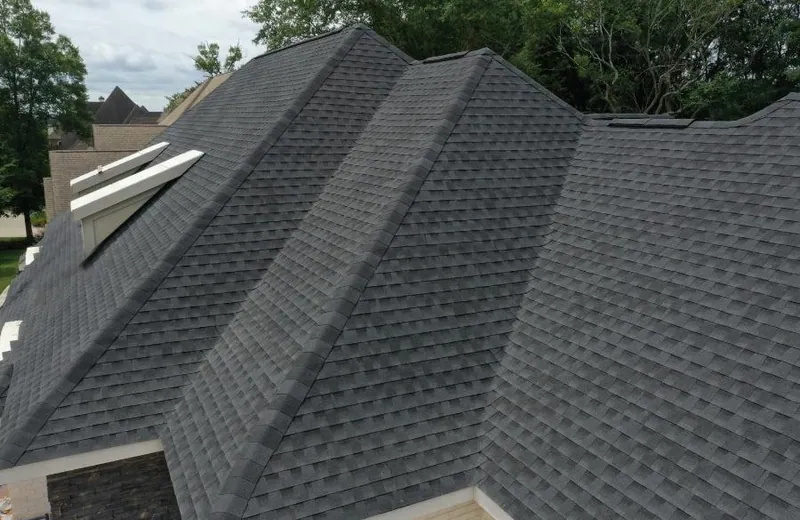
Apopka Roofing FAQs
How much does a new roof cost in Apopka?
Most asphalt shingle replacements on Apopka-area homes cost between about $11,000 and $32,000, depending on size and roof complexity. A simple single-story ranch home lands toward the low end. A two-story subdivision home with a complex hip roof lands toward the high end. Replacing tile underlayment and converting to standing-seam metal usually costs $24,000 to $55,000 or more. Code-required items like sealed decks, deck re-nailing and replacing rotted sheathing also affect the price. We give you an itemized written estimate after inspecting your roof, and financing is available if you'd like to spread out the cost.
How long does a roof replacement take?
The roof work itself takes 1–3 days on most homes. Tile, metal and commercial projects can take a week or more. The longer part is usually before the work starts: permits from the City of Apopka or the right county or city office, plus any HOA approval, typically take 1–3 weeks. During the summer wet season we start early and tear off only what we can dry in before afternoon thunderstorms, so your home stays protected even if the job runs an extra day because of weather.
Do I need a permit to replace my roof in Apopka?
Yes. Florida requires a permit for reroofing. Within city limits, it comes from the City of Apopka Building Division. Unincorporated Zellwood and Plymouth go through Orange County, Sorrento goes through Lake County, and Mount Dora, Eustis, Tavares, Ocoee, Winter Garden, Altamonte Springs and Longwood each issue their own. Expect an in-progress deck nailing or dry-in inspection and a final inspection. Many HOAs also require architectural approval before work begins, and historic districts may need design review. We handle the permit paperwork and help with HOA submittals.
My insurance company says my roof is too old. What should I do?
Start with a professional inspection. Carriers often ask for a 4-point inspection or roof certification once a roof passes 10–15 years old. Under Florida's 2022 reforms, insurers can't refuse coverage just because a roof is under 15 years old, but older roofs face more scrutiny. If your roof still has good life left, documented repairs may satisfy the carrier. If it's at the end of its life, which is common for 2000s subdivision roofs, a replacement with wind mitigation documentation can lower your premium. Get the inspection done well before your renewal deadline.
Can I just repair my roof, or will the 25% rule force a full replacement?
It depends on your roof's age and how much needs repair. Under Florida's 25% rule, repairing more than 25% of a roof section within 12 months traditionally requires bringing that whole section up to current code. Since 2022, SB 4-D allows roofs built under the 2007 code or later to be repaired without a full replacement if they're compliant. Older roofs, like many 1970s–90s Apopka ranch homes, are more likely to trigger the rule. We measure the repair scope and explain your options before any work starts.
How can I make my roof last longer in Florida's climate?
Keep valleys and gutters clear of oak leaves and pine straw. Trim limbs overhanging the roof. Make sure your attic has proper soffit and ridge ventilation, and replace cracked pipe boots before they leak. Treat algae with soft-washing, never a pressure washer, because that strips granules. Schedule an inspection every year, ideally in spring before hurricane season, and again after any major storm. If you're replacing your roof, reflective shingles, a sealed roof deck and better ventilation all help it hold up against Apopka's heat and storms.
When should I call a roofer right away instead of waiting?
Call right away if you see water coming through a ceiling, missing shingles or exposed decking, a limb on the roof, or sagging anywhere. Call the same week for new ceiling stains, granules piling up in gutters, lifted shingles after a storm, or cracked tiles. Summer storms come almost every afternoon here, so a small opening can turn into soaked insulation and drywall within days. If you've had a named storm, have the roof inspected promptly so damage is documented while it's fresh, which can matter for an insurance claim.
Should I choose shingles, metal or tile for my Apopka home?
Architectural shingles have the lowest upfront cost and work well on most Apopka homes. Standing-seam metal costs more but reflects heat, handles wind well and can last decades, which makes it popular on barns in Zellwood and historic homes in Mount Dora. Concrete tile suits higher-end communities like Horizon West and Longwood, but its underlayment needs attention around year 20–25. Check your HOA rules before deciding, since some restrict metal. We'll compare cost, lifespan, energy performance and insurance impact for your specific home.
Serving Apopka, FL & Nearby
Protect Your Apopka Home Before the Next Storm
Whether it's a leak, an insurance deadline or a roof nearing 20 years old, the sooner you know what's going on up there, the more options you have. Schedule your roof inspection today.
- ✓Thorough roof and attic inspection with photo documentation
- ✓Clear, itemized written estimate with no pressure
- ✓Honest repair-versus-replace recommendation
- ✓Permit and HOA paperwork handled for you
- ✓Same-day dry-in scheduled around summer storms
- ✓Bonded and insured crew on every project
- ✓Financing available for repairs and replacements
⚡ Storm damage or an active leak? Call now. Our emergency roofing service focuses on tarping and drying in to stop interior damage.
Bonded • Insured